Monday, 20 August 2018

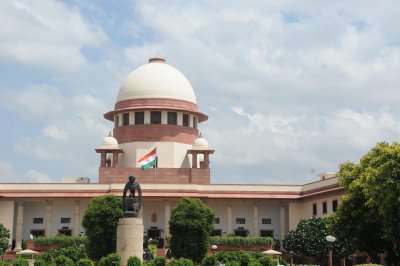
SC to hear plea on AFSPA dilution on September 4

New Delhi, Aug 20 (IANS) The Supreme Court will hear on September 4 a plea by a group of serving Army officers against the dilution of AFSPA that gives immunity to military personnel from prosecution for their actions in disturbed and insurgency-hit areas.A bench of Justice Madan B. Lokur and Justice Uday Umesh Lalit will hear the matter. The bench is already hearing a plea by kin of victims of alleged fake shootouts or extra-judicial executions in Manipur by state police and the armed forces. A bench of Justice Madan B. Lokur, Justice S. Abdul Nazeer and Justice Deepak Gupta listed the matter for hearing by the two-judge bench on September 4.The petition is essentially rooted in the top court's order on alleged extra-judicial killings in Manipur.The petitioners have sought specific guidelines to protect military personnel from criminal proceedings for bona-fide actions done in the discharge of official duties in areas infested with insurgents and witnessing proxy wars against India.The petitioners range from Section Commanders to Commanding Officers who lead section, platoon, company, battalion made of 10 to 1,000 men each.They have contended that the protection provided by the Armed Forces Special Powers Act (AFSPA) does not confer any special right on a soldier for himself, but facilitates his functioning and operations in extraordinary circumstances of proxy war, insurgency, armed hostility, ambushes, and covert and overt operations.Drawing a distinction between routine policing and military operations in disturbed areas, they contended that absolute protection for bona-fide actions of soldiers in extraordinary situations is imperative to enable them to carry out their duties effectively and efficiently.This protection from criminal prosecution for bona-fide actions of a soldier in the course of military operations in disturbed areas, the petition says, is sine qua non for the protection of the country's sovereignty and integrity.The officers have sought a court direction that "protection of persons acting in good faith under the AFSPA is sacrosanct with the sovereignty and integrity of the nation" and that "no prosecution, suit or other legal proceeding shall be instituted, except with the previous sanction of the Central government...."They further averred that it was the Army alone which is familiar with the dynamics of these operations, and was capable of probing allegations of criminality, misuse, abuse, or of excessive use of power by men in uniform."Civil police or even the Central Bureau of Investigation can't even be expected to be in the know of complete picture," they claimed.The petition by Colonel Amit Kumar and others is rooted in the persecution and prosecution of military personnel for carrying out their bona-fide duties in disturbed areas of the northeast, particularly in Manipur and trouble-torn Jammu and Kashmir, and directing registration of cases.The military personnel, the petitioner officers contended, were being targeted without making any distinction or determination whether their actions were in good faith and without any criminal intent.--IANSpk/tsb/sed .

(This story was auto-published from a syndicated feed. No part of the story has been edited by The Quint.)

Sunday, 12 August 2018

ECHS beneficiaries can avail AYUSH treatment

The Ministry of Defence (MoD) has approved treatment under Ayush (Ayurveda, Yoga, Naturopathy, Unani, Siddha and Homoeopathy) for Ex-servicemen Contributory Health Scheme (ECHS) beneficiaries.

Pune: The Ministry of Defence (MoD) has approved treatment under Ayush (Ayurveda, Yoga, Naturopathy, Unani, Siddha and Homoeopathy) for Ex-servicemen Contributory Health Scheme (ECHS) beneficiaries. Also, to meet the aspirations of a large number of veterans, the Central government has allowed ECHS patients to claim travel allowances as entitled for the rank at the time of retirement for rail journeys/travel by government transport.

“Till now, only allopathic system of treatment was allowed in ECHS. There were rising aspirations on part of ECHS beneficiaries to get AYUSH treatment. In a major significant move, the MoD has now authorised AYUSH treatment for all ECHS beneficiaries. In the current approved authorisation, treatment in government AYUSH hospitals is permitted on a reimbursement basis at full rates including medicines prescribed. Permission can be taken from OIC PC/Dir RC/ CO ECHS as decided by the patient. Only one system of treatment is allowed at any point of time,” the Indian Army tweeted on Friday.

In another development, ECHS patients have been permitted to claim travel allowance as entitled for the rank at the time of retirement for rail journeys/travel by government transport. Air travel has been authorised only in medical emergencies on certification of the medical officer and OIC polyclinic. 

“Patients were facing difficulty in claiming their travel entitlement when travelling in own transport/using private transport. In a significant move to assist all ECHS patients, MoD allows travelling allowance by all modes of transport including sea and river streamer while limiting the same to an entitled class of travel when treatment is not available in the concerned station,” the Army tweet states. 

What is ECHS?
ECHS is a flagship scheme of the Ministry of Defence, Department of Ex-Servicemen Welfare. The aim of the scheme is to provide quality healthcare to ex-servicemen pensioners and their dependents. The scheme has been structured on the lines of CGHS to ensure cashless transactions, as far as possible, for the patients and is financed by the Government of India. There are 424 operational ECHS polyclinics covering 347 districts in the country with approximately 52 lakh beneficiaries. 


Mubarak Ansari : 09.27 AM Esakal

http://www.sakaltimes.com/pune/echs-beneficiaries-can-avail-ayush-treatment-23083

Saturday, 11 August 2018

Increasing the Qualifying Service for Pension

Gp Capt CRR Sastry (Retd.)

imageJt Secretary, TSEWA

Gp Capt CRR Sastry was commissioned on 28 December 1977 in Administrative Branch of IAF. He is an alumnus of DSSC who worked in Personnel Staff of IAF. The views expressed in this article are compiled from the discussions on the matter during meetings of TSEWA and are intended to provide in puts for decision makers.

  Armed Forces is not just another department of Government and the Military Service is not like any other Government Service. Armed Forces is the last resort of the Nation and each member of the Services is a defender of not only the borders of the Country but also our Democracy and the Constitution. The oath taken by each member of Armed Forces in which he swears allegiance to the Constitution and promises to obey the orders of Superior Officers in defence of the country even to the risk of his life is no empty promise. Under such circumstances, the Government has to think with much circumspection on any changes to the Terms and Conditions of Servicemen.

Recently it is understood that Army Headquarters is considering a proposal to increase the qualifying service required by Soldiers of Infantry to earn full Pension from 15 to 20 years. It seeks to disincentivise Premature Discharge from service by imposing a cut of 25% in the Pension of soldiers who seek premature discharge after 15 years of service and 15% in the Pension of Soldiers who seek premature discharge after 17 years of service. Further there is also a proposal to make Training Period of Soldiers non-Pensionable. All these steps are proposed with the avowed aim of reducing the Pension Liability of Government. Since the issue concerns the morale of the defenders of the Nation, we need to deliberate the matter in great detail by delving deep on the Origin of Pensions, Differences in Service Conditions between Military and Civil Service, Measures to reduce Pension Liability, Legal Aspects of Military Service, Policy Implications, Morale Aspects, Humanitarian Aspects, Likely Repercussions and finally make a few recommendations.

Pensions and their Origin. It is believed that Pensions as we see them today originated in Greek and Roman Empires where the Legionnaires were rewarded for their past services in the Imperial Army with grant of lands and Cash grants on a monthly basis. The Pensions till the advent of a welfare state were unheard of for any government servant other than a soldier. The Pension for a soldier is of greater significance than to a civil servant who enjoys 33 years of service mostly at home town or near to that place and retires with substantial pension compared to a Soldier who has seen service always away from his home state and only till the end of his youth say 40 years unless he is lucky to become a JCO. Thus, the quality of the post retired life of a soldier is entirely dependent on the Pension he receives and any cut in such pension what so ever will only mean penury.

Differences in Service Conditions between Military and Civil Service. The Military person retires early with about 20 to 26 years of service depending on his promotion to next rank. His non promotion is often due to the steep pyramidical structure of the Army and consequent lack of vacancies rather than his unsuitability for promotion. Early retirement either due to non-promotion at the end of his enrolment term or due to Individual opting out knowing that he will not be promoted, always means lower last pay drawn and hence lesser Pension, Gratuity, Leave Encashment value and Commutation value of Pension. Now when the soldier reaches home with retiral benefits, future stares hard at him. His first requirement will be to acquire a dwelling unit as continuous stay away from joint family home has alienated him from his extended family and this will exhaust all his terminal benefits. Compare this with the position of his class mate in school who managed a Civil Post in Government Department. Staying near home or at the home town itself, he is able to make his dwelling unit much before retirement and also acquire assets that would yield substantial income to him post retirement. If he is a Post 2004 recruit, he may not enjoy the inflation proof Pension but the Contributory Provident Fund @12% per month gives him good pension. Added to this he would get higher Gratuity and with the assets he has acquired, the quality of his post retired life would be much better.

Measures to reduce Pension Liability. If the Government is serious about reducing the Pension Liability of a Soldier, assured lateral employment for them in or near his home town is a reasonable approach. Several Pay Commissions have recommended lateral employment of the trained and disciplined Veterans of Armed Forces in Government and Public Sector Undertakings and such recommendations did not even come for serious consideration prior to implementation due to the opposition from trade unions and others. Private Sectors will always be willing to employ Veterans provided they see tangible benefits in the form of Tax Benefits.

Legal Aspects of Military Service.

(a) The Military Service is much more onerous than that of Civil Department. A person accepting the appointment to a civil post is an agreement of service with only civil liabilities and he has all fundamental rights guaranteed by the Constitution, and also the benefits of Trade Unions and Collective bargaining. A person enrolling himself enters into a valid contract which has both civil and criminal liabilities. His fundamental rights are severely curtailed and he has no benefit of Unions and Collective Bargaining.

(b) Onerous service conditions imposed on a Citizen who has volunteered to join the Army to guard its borders of the Nation and protect its Sovereignty and Integrity against the internal and external threats. All the restrictions imposed on his rights are the requirements of the Nation and hence his terms of retirement as well as the early retirement should be generous and their implementation should have a positive tilt in favour of the Veteran and not against him.

(c) If due to certain personal, family or health requirements or due to lack of career opportunities he needs to take early retirement and the Army agrees to release him, then it will be grossly inequitable and onerous to impose cut in his pension. In any case the Army has the right to refuse the early retirement sought by an individual but having agreed for his early retirement and achieving the aim of getting the unwilling persons out, the army should not impose cut on his pension.

(d) The proposal to make Training Period not countable for Pension seems to be ill advised and it will not stand the scrutiny of law as it runs counter to many judgements of the Hon’ble SC especially the one in case of Air Force Met Officers. Any period of service for which a person has been paid should be counted for promotion. More over in case of enrolled persons such Training period will count for the term of Engagement.

Policy Implications.

(a) Will this policy of imposing cuts on Pension for early retirement applicable only for Infantry or will extend in due course to other Arms/Services of the Army as well?

(b) When the individual dies his wife also will bear the brunt of his early retirement. On the demise of her husband she will get 60% of his reduced pension only as her Family Pension.

(c) The Army will not agree for early retirement unless the Public Interest does not suffer or it is advantageous for the Army as well to let the person seeking early retirement go. When an NCO who has no chance of Promotion seeks retirement and is discharged, a younger man gets promotion and the Army has a younger and better motivated NCO. Thus, it is a “win-win” situation for both parties and there seems no justification for imposing a cut in the Pension.

(d) It appears to be another attempt to introduce a rule similar to that of 33-year rule. Since the 33-year rule stands abolished no new similar rule should be imposed. By bringing this measure, we can be assured that the Army would retain inefficient and demoralised troops and a few good men who have very genuine grounds to seek early retire, will lose heavily. It is a “lose-lose” situation for both parties to the Enrolment Contract.

Morale Aspects.

(a) Infantry is often called the King of the Army as Infantry alone can physically hold the land and dominate the enemy. No war can be won without a very well trained, healthy and physically fit Infantry with very high degree of morale. If we send out such signals as even consideration of the proposed policy, the morale of the troops will nose dive. It takes just a single very ill thought proposal to shatter the morale of the Soldiers but will take years to restore it.

(b) A happy and well settled Veteran is the best Poster Boy for any recruitment campaign. He will be the best Brand Ambassador of the Army in the villages for attracting the best available talent among the youth to join the Army.

(c) The present state of Employment market where in jobs are few and seekers are many may lull many to think that Army will never fall short of men for recruitment. In case of Officer Recruitment, we already find a curious situation where we thousands of young men ready to join as Officers but most of them are virtually untrainable to make an Officer. Consequently, we find shortfall running to thousands in Officer Cadre. We only pray that such a situation does not arise for enrolment

(d) Further it would be disastrous for the Army and Country if more fit and brave youth choose to join the Services as this measure will make enrolment into Infantry very unattractive. Less fit persons in Infantry which is the cutting edge of the Army would not be good for Army.

(e) A Veteran who is disgruntled due to huge cut un his pension because he had to seek early retirement due to circumstances beyond his control will hardly inspire other to join the Army. A serviceman who could not seek early retirement for fear of huge cuts in Pension will not be a role model soldier or an asset to his unit or Army. Such cut of 15 to 25% Pension will be for not only his life time but also for his spouse when he is no more.

(f) The Irony of situation will hit very hard on him when law makers with one term of 5 years or even part of it can enjoy full pension for life, but he a soldier who has completed 15 years of service and sought retirement due to health reasons, family circumstances or lack of Promotions is made to huge cut ranging from 15 to 25% of their Pensions.

(g) The detailed financial impact of the proposal on the pensions of Sepoy, Hony Naik, Naik, Hony Havildar and Havildar of X and Y groups with 15 years and 17 years is worked out.

Humanitarian Aspects.

(a) A soldier is enrolled at an age between 17- 20 and if he does not get the promotion to higher ranks of Naik and Havildar, he is forced to retire at the age of 39. Promotions are scarce in Army due to the steep pyramidical structure and his family life is disturbed due to frequent postings to Field Areas/ Non-Family Stations.

(b) Long absence from his home town and the Family Estate alienates the soldier considerably. Often, he is deprived of his share of the family assets and the elders in the family tend to support the siblings of the soldiers who stay with them. Hence the Local Administration is unable to protect the interests of the serving Soldiers and on completing his service in the Army, a Veteran finds himself deprived of his share of family assets and if he tries for an early retirement to protect his property, he has to face a severe cut in his pension.

(c) Ultimately the Veteran may not be able to get his share of family assets and the cut due to early retirement entail loss ranging from Rs 4591 to 5516 per month for Sepoy and Havildar of X group with 15 years of service and Rs 4282 to 4851 per month for Sepoy and Havildar of Y group with 15 years of service. In case of NCOs who seek early retirement after 17 years of service the loss will be Rs 2755 to 3384 per month for X group and Rs 2569 to 2929 per month for Y group. The family Pensioners will also lose 60% of the above amount.

(d) It will be very sad that Soldiers who retire will lose as much as Rs 55,000 per annum if he is in X group and Rs 51,000 if he is in Y group. Their family Pensioners get a small solace as they draw the minimum Pension which can’t be reduced further the Losses suffered by Soldiers of different ranks and groups after who choose to exit after serving for 15 years and 17 years are in tables 1 and 2.

Losses suffered by Soldiers and their Family Pensioners who seek Discharge after 15 Years

Losses incurred by PensionersLosses of Family Pension

Sl No

Rank

Years of Service

Group in Army

Pension as per Last Pay

Rs

Pension after Cut Imposed

Rs

Loss Incurred per month Rs

Loss incurred per Yr. Rs

Family Pension per month Rs

Reduced Family Pension per Month Rs

Loss incurred by Family Pensioner per month Rs

Loss Incurred by Family Pensioner Per Year

Rs

Remarks

1

Sepoy

15

X

18363

13772

4591

55092

11018

9000

2018

24216

Minimum Pension

2

Sepoy

15

Y

17129

12847

4282

51384

10277

9000

1277

15324

Minimum Pension

3

Hony Naik

15

X

18928

14196

4732

56784

11357

9000

2357

28284

Minimum Pension

4

Hony Naik

15

Y

17129

12847

4282

51384

10277

9000

1277

15324

Minimum Pension

5

Naik

15

X

21254

15941

5314

63768

12752

9564

3188

38256

6

Naik

15

Y

18427

13820

4606

55272

11056

9000

2056

24672

Minimum Pension

7

Hony Havildar

15

X

21254

15941

5314

63768

12752

9564

3188

38256

8

Hony Havildar

15

Y

18427

13820

4606

55272

11056

9000

2056

24672

Minimum Pension

9

Havildar

15

X

22063

16547

5516

66192

13238

9928

3310

39720

10

Havildar

15

Y

19404

14553

4851

58212

11642

9000

2642

31704

Minimum Pension

Table 1

Loss Suffered by NCOs and Below who seek Discharge after Completing 17 Years of Service

Loss Incurred by Pensioners Loss Incurred by Family Pensioners

Sl No

Rank

Group

Pension as per last Pay Drawn per Month Rs

Reduced Pension Rs Per Month

Loss per Month Rs

Loss per Annum Rs

Family Pension as per Last Pay Drawn Rs per month

Reduced Family Pension Rs per Month

Loss per Month Rs

Loss Per Annum Rs

1

Sepoy

X

18363

15608

2755

33060

11018

9365

1653

19832

2

Sepoy

Y

17129

14560

2569

30828

10277

9000

1277

15324

Minimum Pension

3

Hony Naik

X

18928

16089

2839

34068

11352

9649

1703

20436

4

Hony Naik

Y

17129

14560

2569

30828

10277

9000

1277

15324

Minimum Pension

5

Naik

X

21254

18066

3188

38256

12752

10840

1912

22944

6

Naik

Y

18427

15663

2764

33168

11056

9398

1658

19896

7

Hony Havildar

X

21254

18066

3188

38256

12752

10840

1912

22944

8

Hony Havildar

Y

18427

15663

2764

33168

11056

9398

1658

19896

9

Havildar

X

22559

19175

3384

40608

13535

11505

2030

24360

10

Havildar

Y

19527

16598

2929

35148

11716

9959

1757

21084

Table 2

Likely Repercussions. What could be the consequences of the proposal if implemented? They could be:

(a) The Morale of serving personnel especially those not getting promotions and mulling on early retirement will be shattered and they may not be assets to the Units.

(b) Attracting talented youth for recruitment will become a challenge as the youth perceives that Policies detrimental to them are getting implemented in the Army.

(c) The legal footing of the proposals seems quiet suspect and may find challenges in AFT. It is possible that the Policy does not pass the test of Judicial scrutiny.

Recommendations. Having considered all aspects of the proposal we at TSEWA make the following considered recommendations:

(a) The proposal of not counting Training Period for Pension should not be accepted as every day of service for which a person is paid is counted for Pension. The proposal is not based on a sound legal footing.

(b) The proposal of disincentivising the PMR by imposing cuts ranging from 15% to 25% should not be accepted as it is legally flawed and would lead to poor morale among the troops.

(c) The PMR when sought by persons who are likely to be promoted should be granted selectively, so that army does not lose good NCOs and the strength does not deplete.

(d) The PMR when sought by persons with no promotion avenues should be granted liberally as it helps Army to grant more promotions to eligible soldiers and keep the age of NCOs younger.

IAF deploys helicopters, transport planes for Kerala relief operation

New Delhi Aug 10 (IANS) The Indian Air Force (IAF) on Friday said it had deployed five An-32 transport aircraft two Mi-17 V5 helicopters and an Advanced Light Helicopter (ALH) for rescue and relief operations in the rain-devastated parts of Kerala.
Five An-32 transport aircraft were deployed to transport National Disaster Response Force (NDRF) teams and their equipment from Arakkonam to Calicut an IAF spokesperson said.
Two NDRF teams from Vijaywada and two teams of Army Engineering Group from Bangalore and Hyderabad have been transported to Calicut the spokesperson said.
He said two Mi-17 V5 were pressed into service for distribution of relief material and winching operations.
On Thursday three people were winched to safety by IAF helicopters and 300 kg of relief material was dropped for flood affected people.
These helicopters continue to be deployed for relief and rescue operations even now and are being tasked as requested by the state administration.
Many parts of northern Kerala are completely isolated by landslides and floods due to heavy rains. The state government had requested IAF to provide urgent assistance in Wayanad for providing relief to the affected people.
The IAF responded to the crisis extending all possible assistance to the people affected by landslides and floods in Kerala through its Humanitarian Assistance Disaster Relief (HADR) missions.
The IAF will continue its assistance till the situation is normalized the spokesperson said.

Rajarshi Shahu Chhatrapati of Kolhapur, a reformer ahead of his time


The symbolism of the site, in Kolhapur, Maharashtra, where Aashutosh Kharade, a 27-year-old unemployed Maratha youth, is sitting on protest with fellow Marathas, cannot be overstated. A qualified engineer, he is demanding 16% quota for the Maratha community in education and government jobs in Maharashtra. The makeshift stage erected at Kolhapur's Dasara Chowk faces the statue of Rajarshi Shahu Chhatrapati (1874-1922), the great reformer king of the princely state of Kolhapur and a pioneering benefactor of the backward classes. Nearby is the Muslim Boarding School, built in 1906, after Shahu Chhatrapati decided to set up exclusive boarding schools for castes and communities that were denied the benefit of education in the Hindu caste hierarchy. Four years before this school came up, the Maratha ruler of Kolhapur did something that leaves Kharade awestruck even today.

On 26 July 1902, Shahu Chhatrapati, only 28 then, issued a historic document in the gazette of the Karveer (Kolhapur) state. It was a notification in English that reserved 50% of government posts for backward class candidates. Two days later, the England-returned Chhatrapati issued the same notification in Marathi, as was his administrative style. History had been made, as developments that followed confirmed.

'That was the first instance of a government issuing quota in India, a full 48 years before independent India adopted the Constitution in which (B.R.) Ambedkar drafted the reservation policy! Ambedkar consecrated in the Constitution what social activist Jotiba Phule (1827-90) before him had demanded of the British rule but wasn't given and what Shahu Chhatrapati codified and institutionalized. I call it the first manifesto of affirmative action in India,' says veteran Maratha historian Jaysingrao Pawar, who is the director of the Shahu Research Centre at Shivaji University in Kolhapur.

Pawar has authored a great body of work on the life and works of Rajarshi Shahu Chhatrapati, who was born as Yashwantrao Ghatge in an aristocratic family of Kagal in Kolhapur state but was adopted into the Bhonsale dynasty and became the ruler of the princely state in 1894. Pawar, a votary of the Maratha quota today, is fascinated by the 1902 notification, which, he says, was just one of the several reformist measures that made Chhatrapati Shahu Maharaj the 'people's king' and whose rule (1894-1922), he adds, carried the mantle of the social and intellectual renaissance that had started to sweep Maharashtra in the 19th century.

In one of his books (Rajarshi Shahu Chhatrapati: Ek Magova or Rajarshi Shahu Chhatrapati: A Look Back), Pawar calls Chhatrapati Shahu Maharaj a 'prophet ahead of his time'. 'Today, the advocates of democracy and liberalism world over have accepted the principle of affirmative action as the primary means of emancipation of the underprivileged and the oppressed. But here was a man who not only thought about it 116 years ago but even codified it by self-motivation,' Pawar says.

There are reasons why Rajarshi Shahu Chhatrapati is considered a classic social revolutionary in the reformist tradition of Maharashtra. Ruler of one of the two seats (the other being Satara) of the Maratha empire founded by Chhatrapati Shivaji, he consciously exposed himself to outside influences and especially the modern European ideals of democracy, fraternity and individual liberty. Back home, he interacted with prominent rationalists and reformists like Mahadev Govind Ranade, Gopal Krishna Gokhale and Gopal Ganesh Agarkar. Educated at Rajkot's Rajkumar College, Shahu Chhatrapati travelled extensively in Europe and India, absorbed all that he could, and implemented many of those things in Kolhapur.

That he was much ahead of his time is evidenced by the astounding trajectory and range of the revolutionary and reformist laws/decrees/manifestos he issued. Like the quota manifesto, many of these legislations predated, by several decades, similar laws that the Maharashtra legislature or Parliament passed. Like the Compulsory Primary Education Act of 1917, the Legal Sanction to Inter-caste and Inter-religion Marriage Act of 1919, the Law for Prevention of Cruelty against Women, 1919, and the Manifesto against Observance of Untouchability, 1919.

Manjushri Pawar, a Kolhapur-based researcher, attended a workshop at Shivaji University in Kolhapur on 2 August to mark the 100th year of the anti-domestic violence law that Shahu Chhatrapati had passed. 'One can understand the radical ideas and reforms that Jotiba Phule and Ambedkar propagated because they personally bore the wrath and humiliation of the caste system. But Shahu Chhatrapati was a ruler who could have ensconced himself in the comforts of power. Instead, he exposed himself to his people and their pathos. Otherwise, how would a ruler know what kinds of violence an ordinary woman faces in her life? That was the spirit behind the law against domestic violence,' Pawar says.

Pawar locates the 1902 manifesto of reservation between two other milestones. The first, according to him, was in 1882, when Jotiba Phule, in his address to the education commission, or the Hunter Commission, demanded that the British purge the education system and public services of the near total dominance of Brahmins. Phule belonged to the Mali caste, which is part of the large groupings categorized as Other Backward Classes (OBC).

'Though the British considered Brahmins as their enemies, they were wary of taking them on since the latter also had a prominent position in the freedom struggle and administration. But Shahu Chhatrapati had this courage. Inspired by Phule and instigated by a particularly nasty incidence of personal humiliation, Shahu Chhatrapati took this revolutionary step in 1902 because he was truly committed to the emancipation of the backward classes,' Pawar says.

How did the Brahmins react to this manifesto? Pawar singles out one reaction: 'Lokmanya Tilak, in his editorials in the Kesari newspaper, called this notification an undiplomatic and immature step and wondered if Shahu Chhatrapati had lost his mind. If this is what Tilak felt, one can imagine the reaction of other Brahmins,' Pawar adds.

The second milestone came on 26 January 1950, when India chose to be governed by the Constitution and when 'a great reformer, emancipator, and legal genius' like Ambedkar, who had a relationship of mutual respect with Chhatrapati Shahu, gave constitutional sanctity to the spirit of the 1902 notification.

'The 1902 manifesto sits between these two milestones,' Pawar says. The 1902 notification says: 'His Highness is pleased to direct that from the date of this order 50% of the vacancies that may occur shall be fixed by recruits from among the backward classes. In all offices in which the proportion of officers of the backward classes is at present less than 50% the next appointment shall be given to a member of those classes.' Article 46 of the Constitution reads: 'The State shall promote, with special care, the education and economic interests of the weaker sections of the people, and, in particular of the Scheduled Castes and Scheduled Tribes, and shall protect them from social injustice and all forms of social exploitation.'

It is important to recall the social and administrative context that led Shahu Chhatrapati to issue such a radical statute.

When he ascended the throne in 1894, Brahmins held 67 of the 71 posts (94.37%) in the administrative department of the princely state. In the ruler's private administration, Brahmins held 46 of the 53 posts (87.79%). The remaining posts in both departments were occupied by non-Brahmins like British officers, Anglo-Indians, Parsis, and Prabhus (upper-caste Hindus). 'This was what Shahu Chhatrapati called the Brahmin bureaucracy. He discovered the irony that though this was a Maratha princely state, there were hardly any Maratha (non-Brahmin backward classes, including the Marathas, OBCs, untouchables, Muslims, Jains, and Lingayats) in the administration,' Pawar explains.

What distinguished Shahu Chhatrapati was the fact that he implemented his reforms both in letter and spirit. So, after 1902, when he discovered that the non-Brahmin castes and communities did not have enough qualified candidates to claim the reserved jobs, he started a multi-pronged programme to extend free, universal and mandatory education. In 1917, he promulgated an Act making primary education free and mandatory for every child in Kolhapur state. When he found out that a students' hostel attached to the Rajaram High School and College, which is a vibrant institution today in Kolhapur, practised an admission policy for students of all castes and communities only in theory and was, in effect, open only to Brahmin students, Shahu Chhatrapati began his famous programme to set up hostels exclusively dedicated to particular castes and communities.

He is said to have built as many as 21 hostels in Kolhapur for various castes and communities, several of which survive and have contributed immensely to the cause of education among the backward classes. Gani Ajrekar, chairman of the Mohamedan Education Society which runs the Muslim Boarding School, says the facility also runs coaching classes for civil services and 34 students, including three from the Muslim community, have cleared the Maharashtra Public Service Commission (MPSC) examination so far.

These measures greatly changed the social and administrative profile of the princely state. In 1917, when the Act making primary education free and compulsory was passed, Kolhapur had only 27 schools with 1,296 students. By the time he died in 1922, Shahu Chhatrapati had helped build 420 schools which admitted more than 22,000 students. When he took over the reins of the state, the Rajaram High School and College had only 7.6 % students from the non-Brahmin castes. By 1922, this figure was 37.7%. In the general administration, the percentage of employees from non-Brahmin castes went up from 5.63% to 62.11% in 1922. The backward classes accounted for 71.71% of the staff in the private administration, up from a mere 13.21% in 1894.

Post-independence, the princely state of Kolhapur merged with the republic. Pawar traces back to 1902 every step in independent India that furthered the affirmative action programme. 'Everything that followed and strengthened the affirmative action, like the Mandal Commission report submitted in 1980 but accepted in 1990, the 1994 reservation policy based on the Mandal report that gave 27% quota to the OBCs who were estimated to account for 52% of India's population, and the 73rd and 74th Amendments to the Constitution that gave 33% reservation to women in local bodies, has the definite imprint and spirit of the 1902 manifesto Shahu Chhatrapati issued in 1902,' Pawar says.

Sukhadeo Thorat, a professor at Pune's Savitribai Phule University, acknowledges the possible 'impact' of the 1902 manifesto on Ambedkar when he drafted the Constitution. 'Of course, Ambedkar deployed different methods and refined the principle of affirmative action using his own scholarship. But the impact the manifesto of Shahu Chhatrapati had and the principle of affirmative action it reflected might have deeply influenced him,' Thorat says. Shrimant Shahu Maharaj, the current family head of the Shahu Chhatrapati dynasty in Kolhapur, and the 13th descendant of Chhatrapati Shivaji Maharaj, describes the 1902 document as an 'inspiration' behind Ambedkar's constitutional philosophy of reservation. 'Ambedkar studied a whole lot of other things and fine-tuned the policy using his mighty intellect and exposure. Yet the 1902 notification was definitely an inspiration,' says Shahu Maharaj.

Today, when Kharade demands quota, the line of demarcation between history and contemporary reality appears blurred, except for one key difference.

In 1902, the princely state of Kolhapur, which covered pretty much the same area as Kolhapur district today, had a total population of 900,000—the upper castes (Brahmins, Prabhus, Shenvis and Parsis), by a liberal estimate, accounted for just 26,000. The rest belonged to the backward classes. Yet, this overwhelming majority did not rise up in rebellion against what Shahu Chhatrapati called the 'Brahmin bureaucracy'.

In contrast, the Marathas, estimated to be 32-35% of Maharashtra's 111.24 million population (according to Census 2011), and who formed a large chunk of the backward classes targeted by the 1902 notification, are now on the warpath. And those demanding reservation comprise the whole cross section of the Maratha community, right from a commoner like Kharade to Shahu Chhatrapati's descendants like Shrimant Shahu Maharaj and his son Sambhaji Raje, a Bharatiya Janata Party MP in the Rajya Sabha.

'If Shahu Chhatrapati could do it 116 years back, why can't a sovereign and elected government do it today? The very fact that we are demanding reservations today means that the objectives Shahu Chhatrapati set out to achieve in 1902 have not been achieved,' Kharade says, as he joins others in shouting 'aarakshan aamchya hakkache, naahi konachya baapaache (Reservation is our right and not someone's personal preserve)'. The life-size statue of Shahu Chhatrapati looks on.

Courtesy: livemint

https://www.livemint.com/Leisure/PLkr7jdpCeZepho8RMVJbN/Rajarshi-Shahu-Chhatrapati-of-Kolhapur-a-reformer-ahead-of.html